Intermediate habitat. Occurs at depths of approximately 8–12 m.
Feeds over sand and breeds inside caves formed by rocks resting on the sand.
Geographic distribution:
Namalenje Island, Nankoma Island, Maleri Island, Nakantenga Island, Mumbo Island,
and Chidunga Rocks (Lake Malawi).
Typical adult size:
Males up to 14 cm, females up to 11 cm.
Recommended aquarium size:
400 L
Aquarium setup:
Minimum tank length of 140 cm. Fine sand substrate with scattered groups of rocks
forming caves. Keep one male with 1–2 females, or a larger group in a sufficiently
spacious aquarium. House only with peaceful Malawi cichlids.
Diet:
Carnivorous. Feeds on small invertebrates living in the sand, located using enlarged
sensory pores on the head.
Breeding:
Maternal mouthbrooder. Males defend caves as spawning sites; only males with concealed
territories are successful breeders. Females occur singly or in small groups over sand.
Aggression:
Generally peaceful but easily stressed by aggressive species. Avoid boisterous mbuna.
Special notes:
Previously regarded as a population of Aulonocara baenschi but differs by a much
straighter snout. Not abundant at any locality. The best-known exported form is the
“Sunshine Peacock” from Chidunga Rocks. Avoid keeping together with other
Aulonocara stuartgranti variants due to hybridization risk.
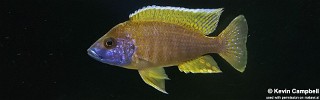
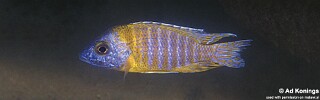
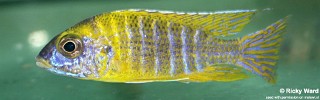
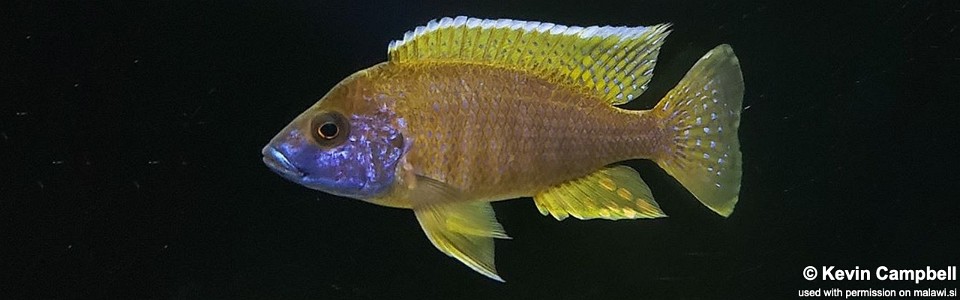




Photo gallery