Kache Point, northern tip of Thumbi West Island, Lake Malawi
Biotope:
Sand–rock interface; territorial males occupy sandy areas close to rocks where they build bowers, females school several meters above the bottom
Geographic distribution:
Southern Lake Malawi; recorded from Thumbi West Island, Gome, Chiofu Bay, Narungu, Luwala and Chimwalani reefs, Mumbo and Maleri Islands, and Chidunga Rocks
Typical adult size:
Males up to approximately 14 cm; females rarely exceed 10 cm
Sexual dimorphism:
Juveniles similar in appearance; males develop dark fin markings and later blue body coloration. Females remain silvery with three lateral spots of similar size, which may fade during spawning
Recommended aquarium size:
Large aquarium recommended; minimum length around 150 cm
Aquarium setup:
Sandy substrate essential to allow bower construction; include nearby rocks for territorial reference points. Best kept with one adult male and multiple females
Diet:
Primarily plankton feeder in the water column; territorial males also forage on sand and rocks and may take larger invertebrates
Breeding:
Maternal mouthbrooder; males build large sand bowers (approximately 26–42 cm in diameter) near rocks, which serve as spawning sites. Females brood eggs and fry in the mouth
Aggression:
Territorial males strongly aggressive towards rival males; females generally schooling and non-aggressive
Special notes:
Member of the Copadichromis mbenjii group; distinguished by three lateral body spots and a thin black submarginal band in the dorsal fin. Assessed as Least Concern (IUCN, 2018), though subject to fishing pressure due to pelagic feeding habits
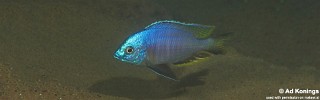
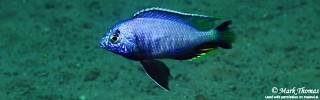
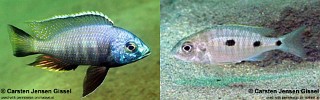





Photo gallery