Lives at the edge of rocky habitats, usually over sandy substrates. Most commonly found at depths between
10 and 20 metres, but recorded from as shallow as 5 metres and as deep as 35 metres depending on locality.
Geographic distribution:
Occurs along the eastern shoreline of Lake Malawi between Kirondo and Mbamba Bay, including offshore islands,
and along the western shoreline between Mdoka and Nkhata Bay. First collected near Kawanga, approximately
15 km north of Nkhata Bay.
Typical adult size:
Up to about 13 cm
Sexual dimorphism:
Breeding males develop a conspicuous white blaze on the head in northern populations (north of Lupingu),
while females and non-breeding males are more silvery and lack strong coloration.
Recommended aquarium size:
Minimum 200 litres; aquarium length at least 125 cm
Aquarium setup:
Provide extensive open swimming space with sandy substrate and scattered rocks forming cave-like structures.
Breeding males excavate cave-crater type spawning sites close to the substrate.
Diet:
Planktivore; feeds primarily on plankton captured in mid-water above sandy areas.
Breeding:
Maternal mouthbrooder. Breeding males construct cave-crater spawning pits beneath or beside rocks.
Spawning often takes place deep inside the bower, which offers protection against egg-robbing cichlids.
Territorial males form breeding colonies with distances of approximately 1–2 metres between bowers.
Aggression:
Mildly territorial during breeding; otherwise relatively peaceful.
Special notes:
Geographic variation is minimal across most of its range, except in the northernmost populations where
males exhibit a distinctive white head blaze. Females and non-breeding males are found year-round feeding
in mid-water.
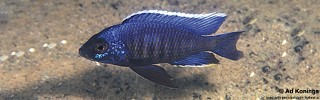
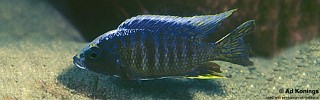
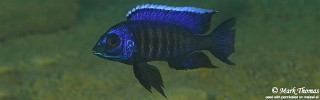
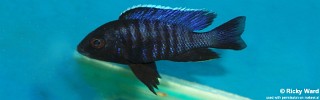
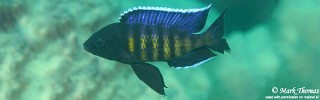
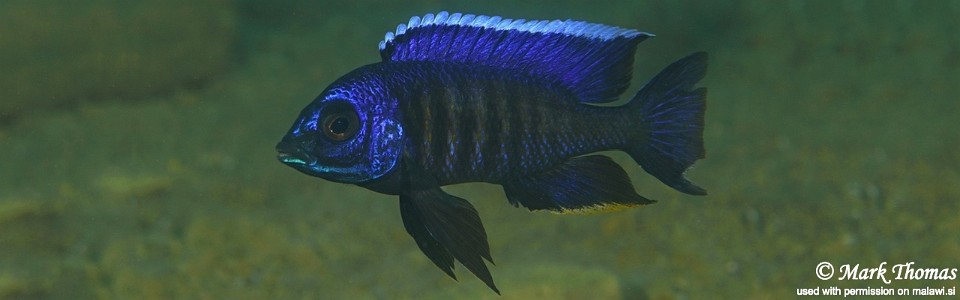




Photo gallery