Sandy and muddy bottoms; prefers shallower sandy shores but is also found
at depths below 30 m.
Geographic distribution:
Lake-wide distribution in Lake Malawi.
Typical adult size:
Males up to about 17 cm total length; females smaller, up to about 12 cm.
Sexual dimorphism:
Males are larger than females and typically show a bright yellow breast.
Females remain smaller and less intensely coloured.
Diet:
Planktivorous. Feeds on plankton just above the silty sand layer,
vacuum-cleaning sediment with a large, laterally expandable mouth.
Breeding:
Maternal mouthbrooder. Breeding males may become territorial and construct
large sand-castles up to about 1 m in diameter and 50 cm high. Males pursue
females over relatively large distances.
Aggression:
Males can be strongly territorial, especially during breeding.
Special notes:
Distinguished by fewer gill rakers (15–18) compared to C. intermedius and
C. pictus. Many individuals show an elongate suprapectoral blotch; in some
specimens the spots form an oblique, blotchy stripe.


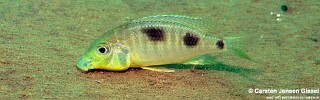

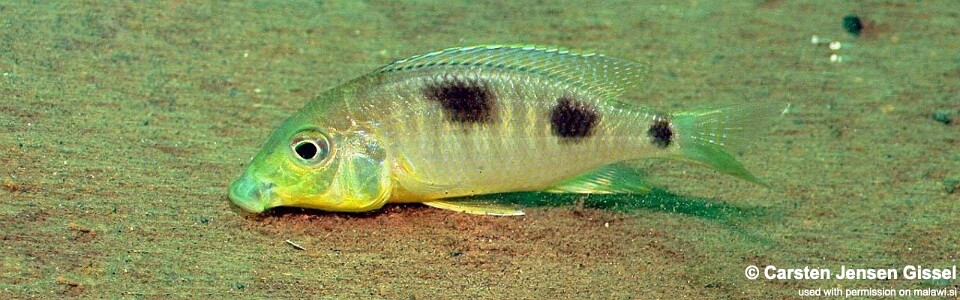




Photo gallery