Sandy habitats in sheltered bays and along sandy beaches, usually in
shallow water
Geographic distribution:
Lake-wide distribution in Lake Malawi
Typical adult size:
Females up to about 20 cm TL; males typically 25–30 cm TL, occasionally
larger in aquaria
Sexual dimorphism:
Males develop a dark breeding coloration with light blue iridescence and
lack anal-fin egg spots; females are sandy yellow to beige with a prominent
three-row spot pattern
Recommended aquarium size:
At least 800 litres; large footprint required
Aquarium setup:
Very large aquarium with extensive open sand areas, interrupted by a few
large stones. Fine sand substrate is essential; plants are unnecessary.
Diet:
Carnivorous; feeds primarily on benthic invertebrates, especially insect
larvae filtered from sand.
Breeding:
Maternal mouthbrooder. Males build sand castles in shallow-water breeding
leks; females mouthbrood and guard fry for several weeks after release.
Aggression:
Very peaceful both towards conspecifics and other large cichlids.
Special notes:
A specialized sand-sifting species that feeds by plunging its elongated
snout into the substrate and filtering prey through the gills. Known for
its remarkable ability to evade fishing nets by diving into the sand,
a behavior widely recognized by local fishermen.
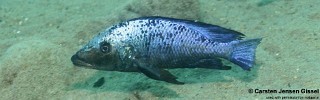
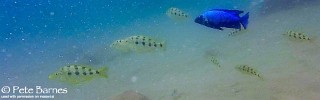

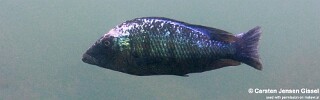
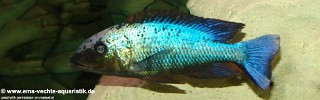
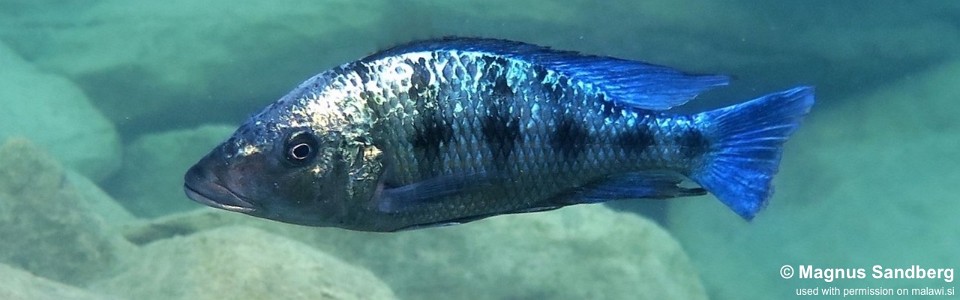




Photo gallery