Sandy to muddy substrates. The species inhabits open
sediment areas of the lake.
Geographic distribution:
Apparently restricted to the southern part of Lake
Malawi in suitable habitats, with an isolated record
from the northern end of the lake.
Typical adult size:
Up to about 9 cm total length.
Sexual dimorphism:
Males are larger and develop more intense breeding
coloration than females.
Recommended aquarium size:
Around 400 litres.
Aquarium setup:
Large areas of fine sand are essential. Sandy zones
can be interrupted with a few larger stones, while
still leaving extensive open substrate. Best kept
in groups with multiple females per male and only
with other peaceful cichlids.
Diet:
Carnivorous. Feeds by sifting sand and mud for small
invertebrates, crustaceans and insect larvae.
Breeding:
Maternal mouthbrooder. Breeding males construct
elaborate spawning structures in muddy sediment,
consisting of multiple mud cones arranged in a
circular formation with a central spawning pit.
Aggression:
Peaceful both within the species and towards other
species. Low intraspecific aggression allows several
males to display coloration within a group.
Special notes:
A small sand-sifting Lethrinops characterized by
relatively large eyes and complex breeding structures
built in muddy substrate.

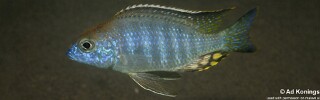


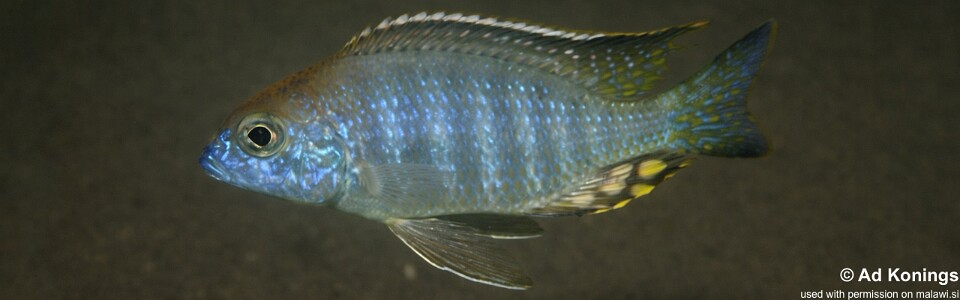




Photo gallery