Shallow sandy habitats between about 3–25 m depth where males build
bowers on the substrate; in breeding arenas with dense aggregations of
territorial males.
Geographic distribution:
Known from the type locality at Kanchedza Island; also reported sympatric
with M. thinos at Masasa Reef.
Typical adult size:
Up to about 14 cm total length.
Sexual dimorphism:
Females are silvery and lack distinctive markings. Males develop breeding
coloration, but cannot be reliably distinguished from M. thinos
and M. conophoros based on colour alone.
Breeding:
Males construct bowers on sand and defend small spawning sites within
large leks. Territorial males are present throughout the year with
seasonal peaks in reproductive activity. Non-breeding individuals remain
close to the breeding arenas.
Special notes:
One of three closely related species allied to M. eucinostomus,
differentiated primarily by the size and shape of the bower mound and
spawning dish. Males lack the large yellow-orange nape patch that
characterizes Nyassachromis prostoma and remain close to their
bowers during territorial activity.
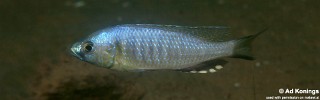
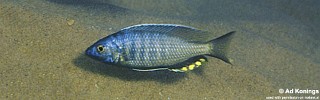
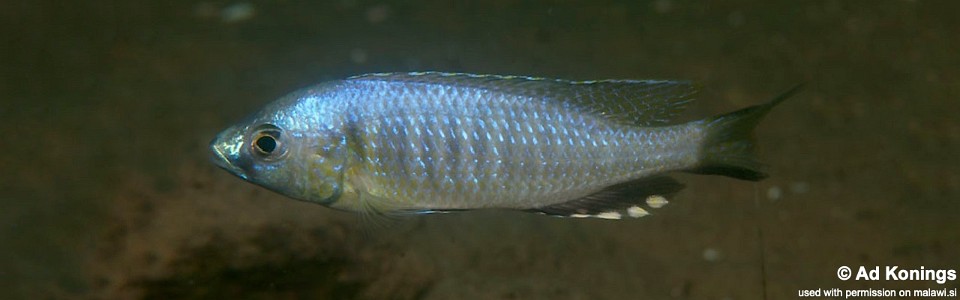




Photo gallery