Sandy areas at depths of 15–35 m; also associated with intermediate
habitats where spawning sites may be defended among rocks.
Geographic distribution:
Widespread around the shores of Lake Malawi.
Typical adult size:
Up to 25 cm total length.
Diet:
Feeds on small fishes and mollusks. Records also include cladocerans
and copepods, together with algae, macrophytes, and sand in the
stomach of a small individual.
Breeding:
Breeding males become entirely blue and lack the diagonal stripe.
Territorial males show eight to nine vertical bars and defend
spawning sites between rocks in the intermediate habitat or
craters in the sand. Eggs are fertilized inside the female’s
mouth. A female has been observed releasing young in front of
a kampango (Bagrus meridionalis) nest.
Special notes:
Deep-bodied, conspicuously bright yellow in life, with the mouth less
ventrally placed than in many similar oblique-striped species.
Some individuals show a characteristically flattened lower jaw.


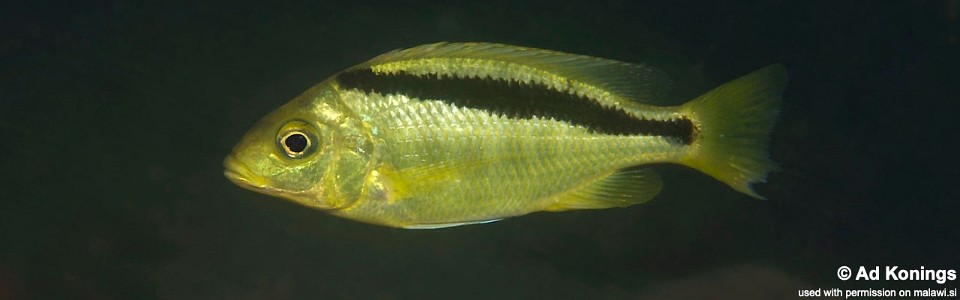




Photo gallery