Intermediate habitat; recorded at depths of 3–15 m.
Geographic distribution:
East coast of Lake Malawi, from Ruhuhu River (Tanzania) to
Makanjila Point (Malawi). Populations found north of Ruhuhu River
(Tanzania) are referred to as Mylochromis sp. 'mchuse' on our
website tanganyika.si.
Typical adult size:
Up to 16–18 cm total length.
Sexual dimorphism:
Males are larger and more colorful. Females remain silvery with shorter
fins; dominated or non-breeding males can resemble females but are usually
larger.
Recommended aquarium size:
A minimum aquarium volume of 400 L is recommended, preferably more
than 600 L.
Diet:
Primarily bottom-dwelling invertebrates and other soft-bodied
invertebrates sifted from sand by pushing the snout into the substrate.
Breeding:
Maternal mouth-brooder. Breeds year-round, mainly from August to January.
Territorial males dig shallow bowls or small semicircular sand-scrape pits
against rocks and court females around the site. Eggs are collected in the
female’s mouth and fertilized during spawning; incubation lasts about three
weeks, and fry are released over the following week.
Aggression:
Generally not aggressive among Malawi haplochromines and is usually not
dominant in a Malawi aquarium.
Special notes:
Both sexes and juveniles show the genus-typical dark diagonal band from
the nape to the caudal peduncle; in some individuals the band is interrupted
in several places. The head is pointed with enlarged lips. Trade names
include “Makanjila Longnose”, “Pointed Nose”, and “Makanjila Mola”, and the
fish has been exported from the Malawian east coast since the mid-1980s.
Populations north of the Ruhuhu River (Tanzania) include individuals with thicker lips and darker females and are
known as “Mylochromis Mchuse”, referred to on our website tanganyika.si as
Mylochromis sp. 'mchuse'. Ad Konings considers these northern populations a
geographical variant of Mylochromis sp. 'lateristriga makanjila'.
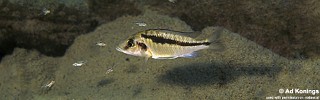
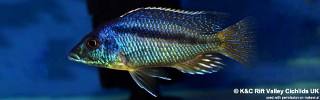
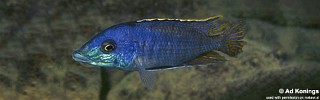
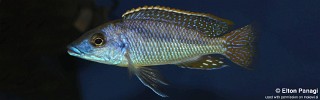
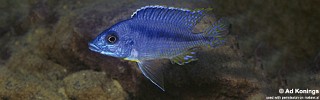
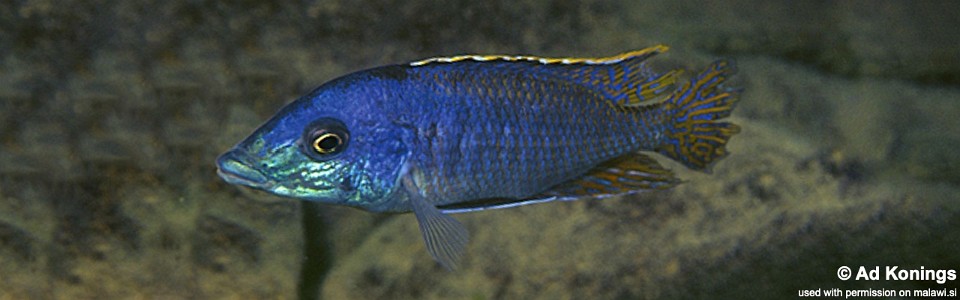




Photo gallery