Occurs in large lakes and river systems, including open
waters and muddy areas. Nests have been observed at depths of
0.5–28 m.
Geographic distribution:
Lakes Malawi and Malombe, and the Upper Shire River.
Typical adult size:
Up to 38 cm total length.
Sexual dimorphism:
Ripe males are black with a broad white margin to the
dorsal and caudal fins and a white or yellow margin on the anal
fin. Females and non-breeding individuals are grey with irregular
vertical bars.
Diet:
Feeds mainly on zooplankton and diatoms. Recorded diet
components include Bosmina (cladocerans) and the diatoms
Aulacoseira and Surirella. In some areas the diet
includes filamentous green and blue-green algae.
Breeding:
Ripe adults recorded from July to March, with two peaks
around September and February in the South East Arm and a single
peak from July to October in Lake Malombe. Males defend nests
25–190 cm in diameter. Females may produce up to about
1000 eggs.
Special notes:
A typical Oreochromis (“chambo”) with a broad head,
grey to brownish body and irregular vertical bars. Distinguished
from other chambo species by bright yellow dorsal fin lappets in
large specimens. Dentition varies geographically, ranging from
4–15 rows of jaw teeth.


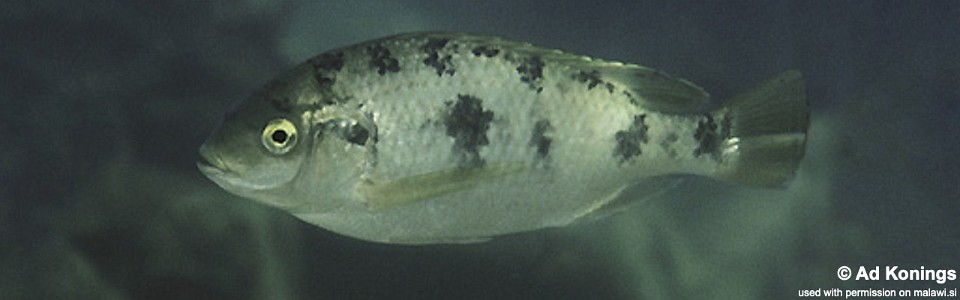




Photo gallery