Intermediate sand-rock habitat. Non-breeding individuals
observed at depths of 35–60 m; breeding population
recorded at approximately 10–15 m depth.
Geographic distribution:
Known from the eastern shore of Lake Malawi between
Gome and Nametumbwe (Malawi), a stretch of about
20 km.
Typical adult size:
Males up to about 13 cm TL; females about 20% smaller
and rarely exceeding 10 cm TL.
Sexual dimorphism:
Males attain larger size and develop breeding coloration
while defending territories; females smaller.
Diet:
Feeding not observed. Dentition characterized by sparse,
primarily unicuspid teeth suggesting consumption of
larger invertebrates or fish.
Breeding:
Breeding males defend small caves with sandy bottoms in
mixed sand-rock habitat at approximately 10–15 m
depth. Distance between territorial males recorded as
4–10 m. Females rarely observed and remain concealed
among rocks.
Special notes:
A very rare, mainly deep-dwelling species not evaluated by
the IUCN. Distinguished from congeners by primarily
unicuspid teeth in the outer oral jaw rows, smaller eye
diameter relative to O. spelaeotes and
O. lithobates, and a deeper caudal peduncle.
Previously considered for placement in
Stigmatochromis but differs in several cranial and
dental characters.

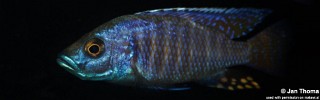
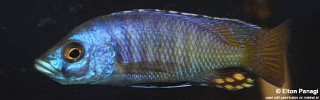
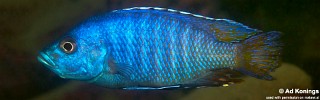
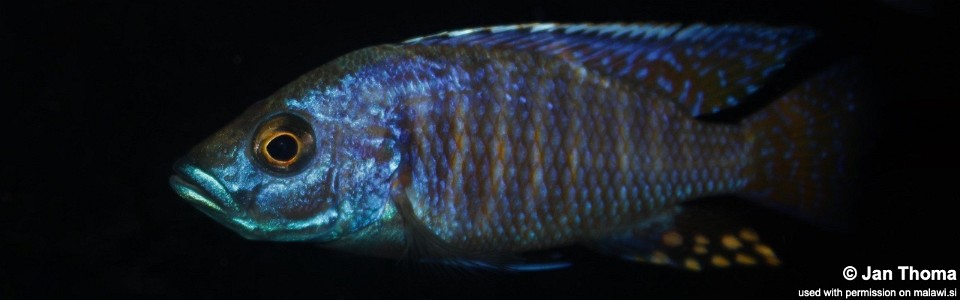




Photo gallery