Sandy substrates in both shallow and deeper regions,
including intermediate sand–rubble zones along
rocky shores.
Geographic distribution:
Lake-wide distribution in Lake Malawi; also recorded
from Lake Malombe and the Upper Shire River.
Typical adult size:
Maximum total length about 15 cm.
Sexual dimorphism:
Males attain a larger size than females and develop
intensified breeding coloration. During the
breeding season a bright orange marginal band
is visible in the anal fin and the typical anal
spots become obscured.
Recommended aquarium size:
An aquarium volume of 450 L is recommended.
Aquarium setup:
The aquarium should contain a substantial sandy substrate,
interrupted by several larger stones to create structure.
One male should be maintained with several females.
Diet:
Feeds predominantly on benthic crustaceans and
other small invertebrates collected from the
sand; plankton may also be taken from the
water column.
Breeding:
Territorial males construct small sand-castle
bowers on open sand. Spawning occurs at
these sites and females mouthbrood the
eggs and larvae.
Special notes:
Characterized by two elongate horizontal blotches
and a faint spot on the caudal peduncle.
Some individuals with a more distinct
melanin pattern were previously regarded
as Nyassachromis sp. ‘interruptus’, but
are now considered conspecific with
Otopharynx argyrosoma. Exported under
names such as “Haplochromis Longimanus”
and “Haplochromis Eucinostomus”.


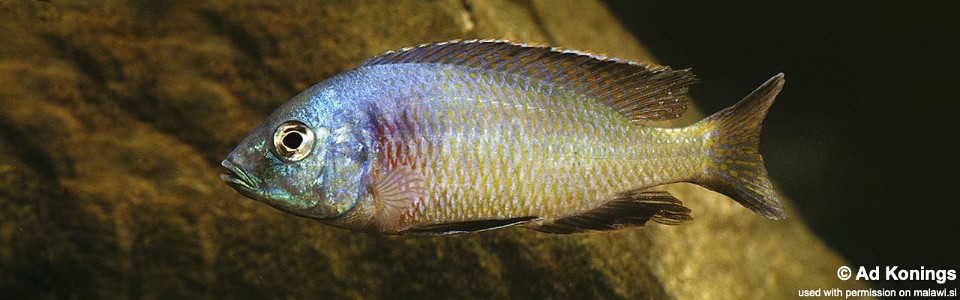




Photo gallery