Open sandy areas near rocky habitats at depths of 7–15 m.
Breeding takes place in the shallow intermediate habitat.
Geographic distribution:
Lake-wide distribution in Lake Malawi.
Typical adult size:
Reaches about 17 cm total length.
Sexual dimorphism:
Breeding males display intensified coloration.
Females retain the characteristic horizontal striping of the Kambuzi group.
Recommended aquarium size:
A spacious aquarium is recommended, with only one adult male per tank due to strong territorial behavior.
Aquarium setup:
Provide open sandy areas with scattered rocks to allow natural foraging and spawning behavior.
Diet:
Stomach analyses revealed algae and plant debris, suggesting grazing from plant surfaces.
Field observations indicate picking food items from the sand, possibly algae growing on shell fragments or small pebbles.
Breeding:
Males defend territories in shallow intermediate habitats and construct very shallow spawning dishes next to rocks.
On observed leks males were spaced 2–5 m apart.
Aggression:
Territorial during breeding, with males defending spawning sites.
Special notes:
Distinguished from other Kambuzi group members by its relatively large mouth and eyes.
Two subspecies have been described, P. marginatus marginatus (southern populations) and P. marginatus vuae (northern populations).
A slender-bodied population from Tchinga Reef near Usisya is currently regarded as conspecific but may represent a distinct species.


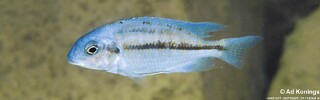






Photo gallery