Primarily pelagic; abundant in surface waters and not
known to utilize sheltered lagoons or river mouths as
nursery areas.
Geographic distribution:
Lake Malawi; recorded from Chilumba Harbour,
Chiofu Bay and Nkhata Bay.
Typical adult size:
Maximum reported about 214 mm standard length
(approximately 26 cm total length); type specimens
167–197 mm standard length.
Sexual dimorphism:
Mature males develop orange pelvic and anal fins
(anal fin with orange eggspots) and reach sexual
maturity at about 167–197 mm standard length.
Females lack the greenish dorsal cast typical of
R. longiceps.
Diet:
Piscivorous.
Breeding:
Sexually mature males recorded at 167–197 mm
standard length; no evidence that females use
sheltered inshore habitats as fry nurseries.
Special notes:
A relatively small, slender species with proportionally
large eyes and comparatively large, widely spaced
teeth. Differs from R. longiceps by having
a larger eye, shallower cheek and larger dentition,
and from R. esox by its less elongate body
form. Previously confused with both
R. longiceps and a medium-large brownish
deep-water species misidentified in earlier
revisions.
Molecular data demonstrate that it is not closely
related to R. longiceps despite similarity
in size and male breeding coloration. Reported to be
very abundant in surface waters of the lake and was
formerly present in the aquarium trade under the
correct name.
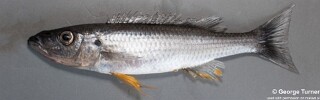
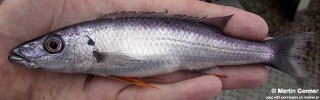
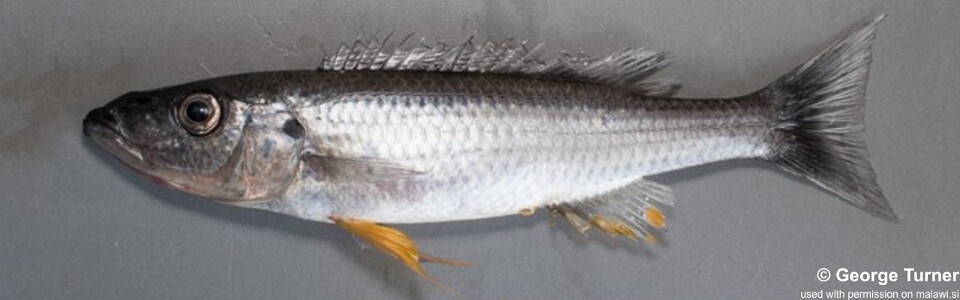




Molecular data demonstrate that it is not closely related to R. longiceps despite similarity in size and male breeding coloration. Reported to be very abundant in surface waters of the lake and was formerly present in the aquarium trade under the correct name.
Photo gallery