Transition zone habitats along rocky shores, moving along the margins of sandy areas while using
rock formations for hunting. The species hunts over sand but remains associated with rocky coasts.
Geographic distribution:
Restricted to the northern part of Lake Malawi. In Malawi it occurs north of Chitande Island,
including Likoma Island and Taiwanèe Reef. In Tanzania it is found between the mouth of the
Ruhuhu River and Nkanda, and is common at Makonde and Kirondo.
Typical adult size:
Males reach approximately 20 cm total length. Females remain smaller, reaching about
17–18 cm.
Sexual dimorphism:
Males attain a larger size and develop breeding coloration. Females remain smaller and are
observed mouthbrooding.
Recommended aquarium size:
A minimum aquarium volume of 500 l with a tank length of at least 160 cm is recommended.
Significantly larger aquaria are required when keeping multiple males.
Aquarium setup:
The transition zone habitat should be recreated with sandy areas combined with large rock
formations that provide visual barriers. Rock structures, crevices and passages should be
included to allow territorial behavior during breeding. The species benefits from open sand
areas adjacent to rocky structures.
Diet:
Carnivorous and piscivorous. In the lake it feeds on smaller fishes and juveniles of other
species, mainly mbuna. In captivity a protein-rich diet is required, including frozen or live
foods such as mosquito larvae, mysis and crustaceans.
Breeding:
Maternal mouthbrooder. Territorial males have been observed defending shallow spawning pits
constructed against rocks at depths of approximately 35 m. Females incubate the eggs in the
mouth.
Aggression:
Moderately assertive. Males become territorial during the breeding phase and may be aggressive
towards conspecific males. Outside the spawning period no permanent territory is maintained.
Special notes:
Frequently confused in aquaristic literature with Sciaenochromis fryeri due to historical
misidentifications. It has been sporadically exported under the trade name “Haplochromis Big
Eye” and represents a distinct northern species of Lake Malawi.
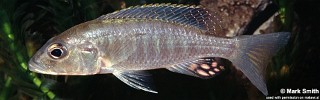
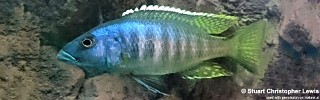


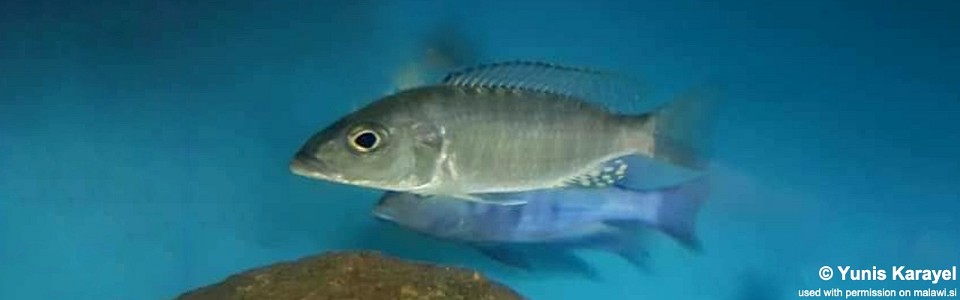




Photo gallery