Primarily associated with sandy habitats and sand areas of the transition zone. It is
considered a deep-water species and has been observed breeding at considerable depths.
Geographic distribution:
Recorded from Tanzanian waters, including Mdoka, and from the southeastern arm of the lake.
It is regarded as having a lake-wide distribution.
Typical adult size:
Males reach approximately 18 cm total length, while females attain about 14 cm.
Sexual dimorphism:
Males grow larger and display breeding coloration, and possess distinct egg-spots on the
anal fin.
Recommended aquarium size:
A minimum aquarium volume of 600 l with a tank length of at least 170 cm is recommended.
Aquarium setup:
Provide extensive sandy areas as the dominant feature of the layout. A lightly structured
transition zone with some rock formations, crevices and passages may be included, but large
open sand surfaces are essential.
Diet:
Carnivorous, feeding on smaller fishes and juveniles of other cichlids. In aquaria a
protein-rich diet is required, including live or frozen foods such as mosquito larvae, mysis
and Artemia.
Breeding:
Maternal mouthbrooder. The species breeds at deep levels. No detailed description of spawning
structures is provided in the available information.
Aggression:
Described as relatively peaceful outside the breeding period, though males may become more
assertive during courtship. It should not be combined with very weak or overly submissive
species.
Special notes:
Considered extremely rare in the hobby and seldom available. It has been compared in general
temperament to Sciaenochromis fryeri. A few specimens collected in Tanzanian waters have been
bred in aquaria.
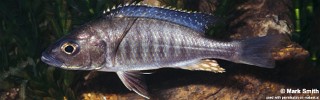

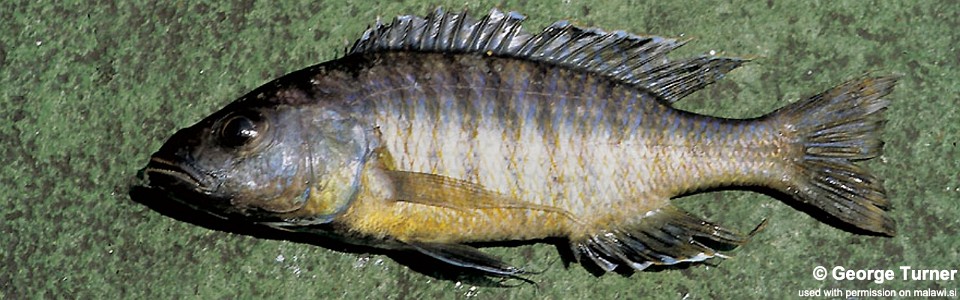




Photo gallery