Most frequently associated with intermediate habitats where rocks and sand occur together and
caves are available. It may also hunt over open sand at some distance from rocks and has been
observed in vegetated areas near kampango nests.
Geographic distribution:
Lake-wide in Lake Malawi, occurring across reefs and islands.
Typical adult size:
A small to medium-sized cichlid reaching about 115 mm standard length. Males can attain
around 15 cm total length, while females remain smaller at about 11 cm total length. In
aquaria, individuals may grow to almost 20 cm.
Sexual dimorphism:
Adult males remain conspicuously azure blue even while hunting. Females are dark brown and
show about 9–11 darker vertical bars.
Recommended aquarium size:
A minimum aquarium volume of 400 l with a tank length of at least 150 cm is recommended.
Aquarium setup:
Provide ample rockwork and caves as shelter, particularly for females, while also allowing
open swimming space. Use fine substrate (sand preferred) so males can excavate spawning bowls.
Diet:
Piscivorous, specializing on very small fishes, especially juveniles of non-mbuna such as
silvery utaka. It is recorded stalking prey and employing a rocking, aufwuchs-feeding mimicry
before a sudden sideways strike. It also targets juvenile fishes hovering above kampango
(Bagrus meridionalis) nests and may hunt at the nest periphery.
Breeding:
Males may display breeding coloration throughout the year. Territoriality is described as
uncommon, but when breeding, males may gather and construct bowers of a cave-crater type,
typically positioned against a large rock. Spawning usually occurs in seclusion beneath rocks
where the male prepares a platform by turning in the sand. Eggs are fertilized outside the
female’s mouth; the female then mouthbroods and releases fry after about three weeks.
Aggression:
Generally described as relatively peaceful in aquaria, and clashes between conspecifics are
reported to rarely result in casualties. It can be maintained with many Malawi cichlids,
including mbuna, but choosing species with similar male breeding coloration is discouraged due
to reported hybridization risk.
Special notes:
Often traded as the “Electric Blue” and frequently exported, with many specimens collected
around Likoma Island; early shipments reportedly came from Maleri Island and the Cape Maclear
area and were sold under older Haplochromis trade names. Southern males may show a whitish head
blaze and regional differences in anal-fin hue are noted. The melanin pattern is described as
9–12 vertical bars, with a convex dorsal head profile and a straight, nearly horizontal basal
head profile, and the species is distinguished within the genus by its darker overall
coloration, including in females. It is frequently confused in aquarium literature with
Sciaenochromis ahli.


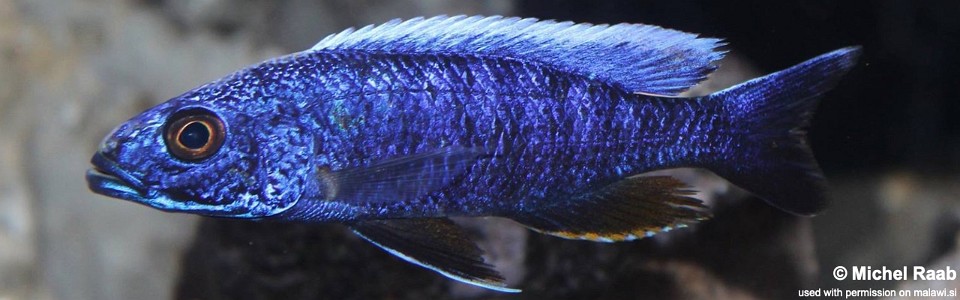




Photo gallery