Associated with sandy habitats in transition zones between rocks, typically occurring at
depths between 5–30 m. It swims approximately 30 cm above the sand while searching for
prey.
Geographic distribution:
Recorded at Kande Island, Likoma Island, Mazinzi Reef, Masasa Reef, Masinje, Senga Bay and
Mdoka, including the southeastern arm of Lake Malawi.
Typical adult size:
Males reach approximately 14–15 cm total length, while females attain about
11–12 cm. In aquaria individuals may grow up to about 18 cm.
Sexual dimorphism:
Males are larger and develop breeding coloration. Breeding males defend territories and show
distinct egg-spots on the anal fin.
Recommended aquarium size:
A minimum aquarium volume of 800 l with a tank length of at least 180 cm is recommended.
Aquarium setup:
A lightly structured transition zone should be recreated with high rock formations providing
crevices and passages, combined with extensive sandy areas. Fine sand substrate is essential.
Lighting should not be excessively bright.
Diet:
Carnivorous and primarily piscivorous, preying on small fishes and juveniles of other
cichlids; invertebrates are also taken. In aquaria a protein-rich diet is required, including
frozen or live foods such as mysis, krill, amphipods, mosquito larvae and Artemia.
Breeding:
Maternal mouthbrooder. Breeding males are territorial and defend an area of about
2 m in diameter centered around a spawning pit excavated in the sand, often partly under a
rock to form a cave-crater. Shallow bowers may also be constructed on open sand when suitable
rocks are unavailable.
Aggression:
Assertive but not described as excessively aggressive. It should not be combined with very
weak species, and care must be taken when housing with smaller cichlids that may be regarded as
prey.
Special notes:
Commonly known as the “Electric Blue Kande”. It is generally encountered as a solitary hunter
except during breeding periods when males gather. Breeding coloration may vary regionally,
with southeastern populations described as more metallic green compared to the more northerly
blue forms.
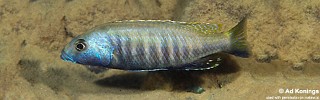
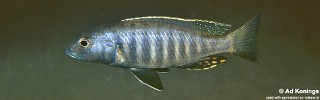

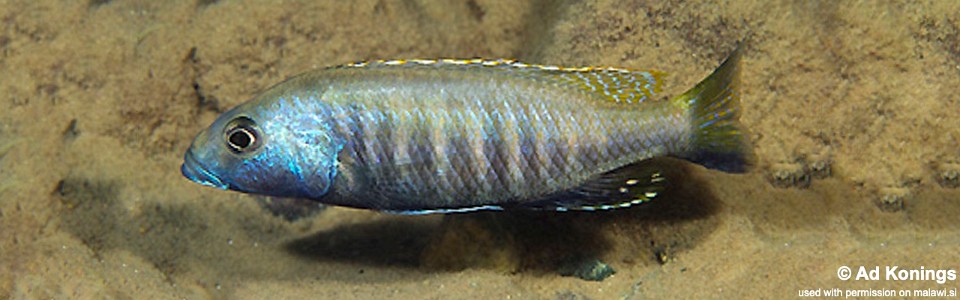




Photo gallery