Rocky habitat, particularly sediment-rich sections of the rock zone with caves,
crevices and deep recesses. Observed at depths between 3–35 m.
Geographic distribution:
Widespread throughout Lake Malawi, although rarely observed due to its
secretive lifestyle and strong association with rocky shores.
Typical adult size:
Up to approximately 16 cm total length.
Sexual dimorphism:
Females and non-breeding males are dark reddish brown. Breeding males defend
caves and display intensified coloration during the spawning period.
Recommended aquarium size:
A minimum aquarium volume of 800 l with a tank length of at least
160 cm is recommended, as larger volumes are advised due to territorial
behaviour and potential colony-style breeding.
Aquarium setup:
A rock-dominated layout with numerous caves, crevices and deep hiding places
is essential. The substrate should consist of various stone sizes rather than
open swimming space. Shaded areas and subdued lighting are recommended.
Diet:
Piscivorous predator specialized on juvenile mbuna. In aquaria it accepts
prepared foods but benefits from protein-rich nutrition.
Breeding:
Maternal mouthbrooder. Males defend caves as spawning sites, where eggs are
deposited on rocks inside the cave. During the breeding period males refrain
from feeding and guard the cave entrance continuously.
Aggression:
Territorial, particularly during breeding. Males defend small cave-based
territories and may form loose clusters of adjacent territories.
Special notes:
A highly secretive and rarely exported species. Breeding in captivity can be challenging,
with reports of unexplained juvenile losses once fry reach approximately 3–4 cm.


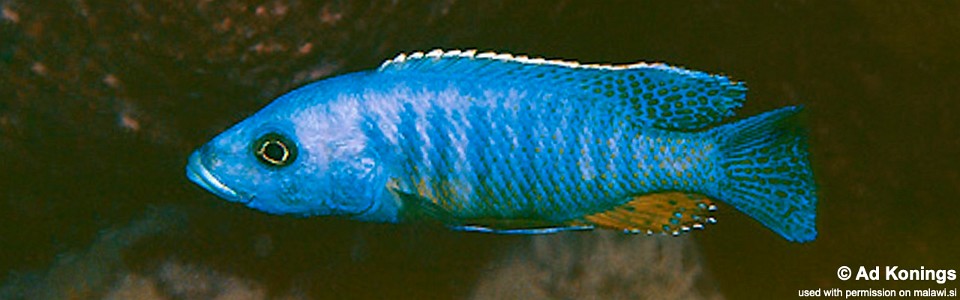




Photo gallery