Transition habitats with sandy sections; commonly encountered above sand. It is described as
waiting in mid-water about 1 m above the substrate before darting down to seize prey.
Geographic distribution:
Recorded from many places around Lake Malawi, particularly along the eastern shores, and
described as lake-wide in distribution.
Typical adult size:
Males reach about 18 cm, while females attain about 14–16 cm.
Sexual dimorphism:
Males grow larger than females.
Recommended aquarium size:
An aquarium volume of at least 600 l with a minimum tank length of 180 cm is
recommended.
Aquarium setup:
A transition-zone layout with large and smaller rock formations that create caves and
crevices, interspersed with open sand areas, is recommended so separate zones are formed.
Diet:
Carnivorous, feeding on juvenile fishes and smaller cichlids. In aquaria it accepts common
foods, with preference given to protein-rich options; frozen foods such as Mysis and mosquito larvae
are suggested.
Breeding:
Maternal mouthbrooder. It is suggested that keeping as a pair (1 male with 1 female)
be considered; harem maintenance (1 male with 2–3 females) is also described as possible in
suitably large aquaria.
Aggression:
Strongly assertive, particularly during the breeding period, with increased intraspecific
aggression noted during courtship.
Special notes:
Characterized by a rounded snout profile and an unusual hunting technique in which the fish
waits well above the sand before lunging downward. It has been exported only infrequently under trade
names such as “Torpedo” and “Kambiri Torpedo” and is described as not established in the aquarium
hobby.


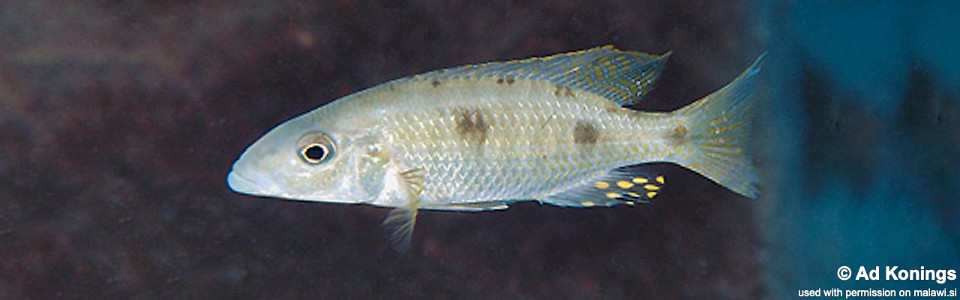




Photo gallery