Muddy bottoms between rocks; associated with sand and sediment habitats where mouthfuls of sand and
sediment are processed during feeding.
Geographic distribution:
Found all around Lake Malawi.
Typical adult size:
About 14 cm total length.
Diet:
Feeds on worms and other soft invertebrates living in bottom sediment; lighter material, including
invertebrates and algae, can be retained while heavier sand is expelled via the gill slit.
Breeding:
Breeding may occur year-round. Males build a bower centered on a small stone, with a semicircular rim
of sand deposited around it; eggs are laid as far as possible beneath the stone.
Special notes:
Tramitichromis is distinguished by a characteristic lower pharyngeal bone with long, slender teeth,
including markedly elongated anterior teeth with backward-bent tips, and by a downward-projecting
anterior blade of the pharyngeal bone. The genus also shows strong, squat lower gill-rakers that form a
near-horizontal grid which can separate heavier sand from lighter food items during sand-sifting. This
species is readily recognized by a prominent diagonal stripe on the flank and has been exported under
the trade names “Lethrinops variabilis” and “Lethrinops Chizumulu”; at Likoma it is known locally as
kambuzi wa chigongo.

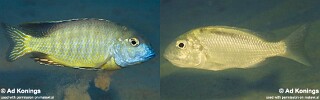






Photo gallery