Coastal sand habitats with extensive sand flats interrupted by small rock plateaus or larger stones;
during plankton blooms, larger schools move into open water over mixed rocky-sandy transitional
substrates.
Geographic distribution:
Lake-wide distribution around Lake Malawi.
Recommended aquarium size:
A minimum aquarium volume of 600 L with a minimum tank length of 180 cm is recommended.
Aquarium setup:
Provide a large open sand area and leave extensive sand zones for continuous foraging; include
several larger rocks to create elements of a transitional zone, particularly toward the rear of the
aquarium.
Diet:
A sand-sifting forager that searches sand and mud for invertebrates, small crustaceans, and insect
larvae by taking mouthfuls of sediment and filtering edible items; during plankton blooms it forms
larger schools and feeds heavily on plankton in open water, and gut contents have been reported as
packed with phytoplankton in some specimens.
Breeding:
A breeding colony has been observed near Mdoka in November and December. Territorial males build
round crater-like pits in sand; where rocks are available, some males construct cave-crater type sites,
and males may also carry sand onto rock to form crater nests. Females have been observed accepting
these alternative spawning sites on rock and spawning with the territory owner.
Aggression:
Very peaceful; during breeding, other males are driven from territories, typically through brief
threat displays.
Special notes:
Tramitichromis is defined by a distinctive lower pharyngeal bone with long, slender teeth, including
strongly elongated anterior teeth with backward-bent tips, and a downward-projecting anterior blade;
the lower gill-rakers are robust and can form a near-horizontal grid that separates heavier sand from
lighter food items during sand-sifting. This species has been considered polytypic, with type material
reported to represent northern and southern entities and a northern specimen designated as lectotype.
It entered the hobby only recently and has also been treated historically as Lethrinops lituris.


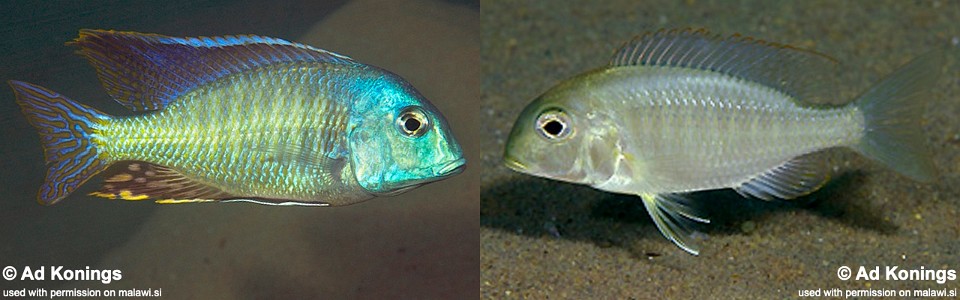




Photo gallery