Intermediate habitat in relatively shallow water,
among small rocks and pebbles accumulated on sand.
Occurs at depths of about 2 to 3 m.
Geographic distribution:
Recorded from Chizumulu Island.
Reports from Likoma Island are considered the result
of an introduction by collectors.
Typical adult size:
Males up to about 6 cm total length;
females rarely exceed 5 cm.
Recommended aquarium size:
150 L.
Aquarium setup:
Aquarium with fine sand substrate
and scattered rockwork forming caves and hiding places.
One male should be kept with two to three females.
In aquaria longer than 100 cm,
more than one male may be kept if sufficient shelters are available.
Suitable tankmates include other small, non-robust mbuna.
Diet:
Omnivorous with a strong tendency toward algivory.
Feeds mainly on algae scraped from rocks.
The narrow, pointed mouth allows access to algae
growing in tight crevices between stones.
Breeding:
Territorial males are present throughout the year.
Males excavate spawning sites beneath small rocks
and heap sand in front of the entrance.
Females and juveniles form small foraging groups
that move through the habitat.
Aggression:
Can be aggressive within the species,
particularly between males.
Generally tolerant toward other species,
but males vigorously defend their territories.
Special notes:
A small rock-dwelling Labidochromis with a distinctive color pattern
of orange-brown or olive bars on a greenish background.
It is distinguished from closely related species
by differences in snout shape, dentition,
dorsal spine counts, and fin markings.
The population reported from Likoma Island
is considered to be the result of an artificial introduction
and may not have persisted or spread around the island.


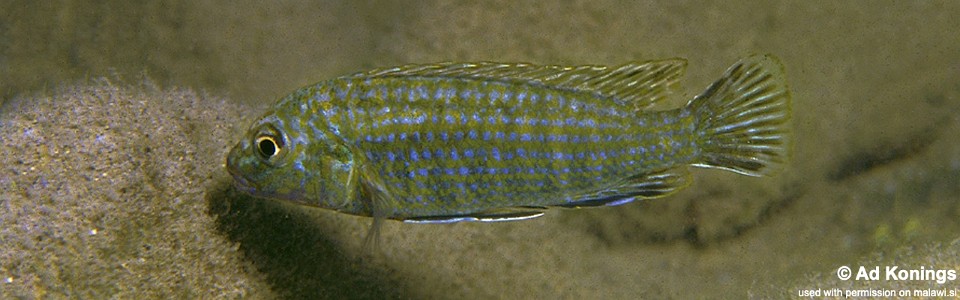




Photo gallery