Sediment-free rocky habitat at depths between 2–10 m.
Geographic distribution:
Restricted to the Tanzanian shore of Lake Malawi, from
Pombo Rocks to Ndumbi Reef, with most specimens originating
from Ndumbi Reef.
Typical adult size:
Males up to about 9 cm total length; females up to about
7 cm total length (usually 6–8 cm in the wild).
Sexual dimorphism:
Males display a powder-blue body with an orange to
orange-red cap on the forehead and dorsal fin; females are
plain grey-brown and smaller, with shorter fins and smaller
anal ocelli.
Recommended aquarium size:
An aquarium volume of at least 250 l is recommended;
Aquarium setup:
Provide abundant rockwork with numerous shelters and fine
quartz sand as substrate. Keep one male with 5–6 females.
Due to strong intraspecific aggression, groups with multiple
males are not recommended.
Diet:
Herbivorous aufwuchs feeder grazing on algae in the wild;
in aquarium offer primarily vegetable-based foods enriched
with spirulina and algae.
Breeding:
Maternal mouthbrooder. Males excavate a spawning pit
beneath a stone; incubation lasts about 3 weeks.
Aggression:
Aggressive both within the species and toward other
species, though generally less territorial than eastern
P. perspicax forms.
Special notes:
Also known as Pseudotropheus sp. ‘perspicax orange cap’.
A Labidochromis-like small mbuna with bicuspid teeth and a
comparatively shorter head than western P. perspicax
populations. Males may roam rather than defend strict
territories in the wild, frequently grazing over larger
areas of reef.
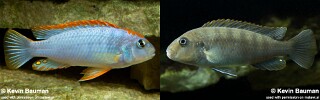
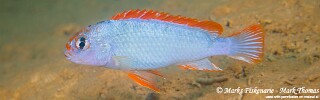
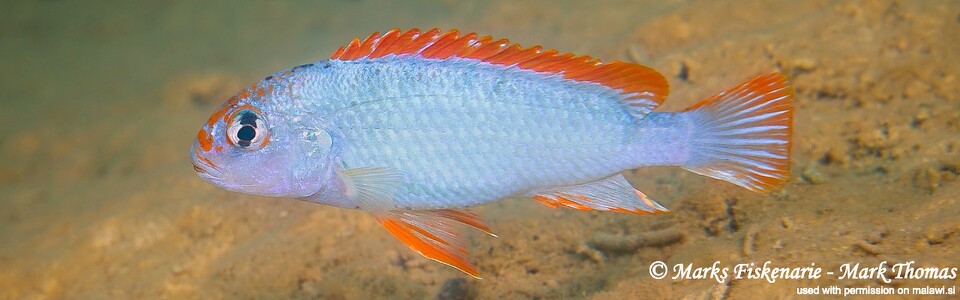



Photo gallery