Offshore deep-water habitats; most frequently recorded at
40–70 m, with captures reported from 40–80 m and more rarely
from 110–130 m. It is described as a midwater-feeding member of the
benthic community rather than a truly pelagic species.
Geographic distribution:
Described from Lake Malawi and reported as widespread in the lake,
based on combined records of specimens previously referred to by multiple
informal names.
Typical adult size:
Type series specimens measure 137.7–162 mm standard length
(about 19 cm total length for the largest type). Most examined
specimens are reported as below 190 mm standard length, with an
estimated maximum total length of roughly 21–22 cm.
Sexual dimorphism:
Females and non-reproductive individuals are described as silvery and
countershaded. Breeding males develop a distinctive “white-back” (reversed
countershading) pattern, with a pale (often white to yellowish) upper surface
contrasting strongly with darker flanks and lower body.
Diet:
Species-specific feeding observations are reported as lacking. The
relatively high outer lower gill-raker count (21–26) is noted as exceeding
that of clearly piscivorous deep-water congeners and as suggestive of a diet
that includes a substantial planktonic component.
Breeding:
No species-specific breeding behaviour is reported. As with other
Diplotaxodon, it is described as a maternal mouthbrooder with a
polygynandrous mating system; males in the reproductive period are described
as developing conspicuous contrasting coloration and pale yellow egg spots
(ocelli) on the anal fin.
Special notes:
The type series was collected in 2013 using chirimila nets at
40–80 m depth, and the original description did not include fresh
photographs or detailed documentation of male breeding dress. Several
previously used deep-water informal forms (including Diplotaxodon
sp. ‘similis white-back south’, sp. ‘deep’, and related phenotypes) are
treated as conspecific with D. altus following re-examination of
material and photographs. Phylogenomic data place D. altus close
to Diplotaxodon sp. ‘ngulube’ and to a specimen provisionally
identified as D. cf. ‘holochromis’, and material sequenced under
the provisional name Diplotaxodon sp. ‘big eye white dorsal’ is
treated as conspecific with D. altus.
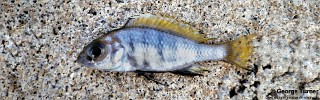
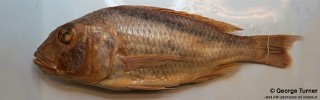
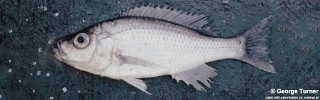
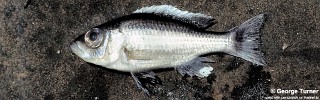

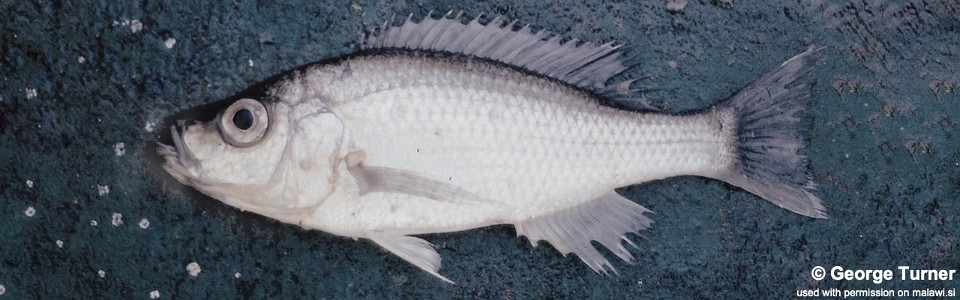



Photo gallery