Rocky habitat without sediment. It is found at depths of 2–4 m, and also
among medium-sized to large rocks in less than 10 m depth on exposed shores.
Geographic distribution:
Mbenji Islands and Nakantenga Island (Lake Malawi).
Typical adult size:
About 11 cm total length; 9 cm in females is reported. Under aquarium
conditions it may exceed this and reach 15 cm TL or more.
Sexual dimorphism:
Males are larger and have longer fins. Females remain brownish with bluish
hints, while males are overall bluish with orange patches, especially in the
dorsal fin.
Recommended aquarium size:
An aquarium volume of 300 L is recommended; a larger tank is also stated
as preferable, ideally over 400 l.
Aquarium setup:
Provide substantial rockwork with many hiding places. For one male, keeping
at least 3–4 females is recommended, and the aquarium should include abundant
shelter of different sizes.
Diet:
Omnivorous. Non-territorial individuals feed on plankton in the water column;
territorial males feed on Aufwuchs within their territories and also take
plankton.
Breeding:
Maternal mouthbrooder. Spawning takes place in the male’s territory with the
typical circular movements and T-shaped posture; eggs are taken into the
female’s mouth and fertilized.
Aggression:
Intraspecific aggression can be high. Territorial males direct most aggression
toward conspecific males, while other species may be tolerated within a
territory; in community aquaria it can become intrusive and may be dangerous
toward conspecifics.
Special notes:
This species occurs on exposed shores and is associated with large rocks; it
forms large foraging schools of females, juveniles, and non-territorial males
that may number several hundred individuals in very shallow water among large
rocks and rocky pillars. It has been traded under the name “Red Top Brevis”.
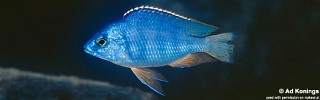
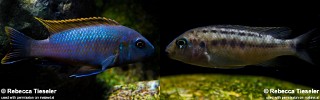
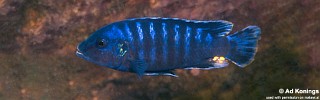
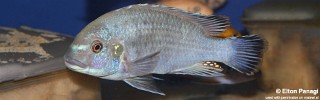



Photo gallery