Pseudotropheus sp. 'tursiops mbenji' Mbenji Island
Genus:
Pseudotropheus
Biotope:
Very shallow intermediate habitat among medium-sized rocks in
sediment-free zones, mostly between 1–3 m depth, with some
individuals down to 6 m.
Geographic distribution:
Only known from around Mbenji Island in Lake Malawi.
Sexual dimorphism:
Males are larger, bluer and have longer fins than females.
Recommended aquarium size:
An aquarium volume of around 400 L or more is preferable.
Aquarium setup:
Provide abundant rockwork with crevices and caves.
Diet:
Herbivorous “dolphin mbuna” feeding on aufwuchs, using a narrow,
elongated snout to crop algae from deep crevices and gripping algae
on flat surfaces with the sides of the pointed jaws.
Breeding:
Maternal mouthbrooder. Males defend territories and spawning takes
place in caves. Incubation lasts around three weeks.
Aggression:
Aggressive intraspecifically and interspecifically, with males
strongly territorial and females often defending feeding territories.
Special notes:
An undescribed member of the “dolphin mbuna” group characterized by
an elongated, beak-like snout. Dominant males show clear vertical
barring while horizontal stripes are not visible, and males defend
territories vigorously.
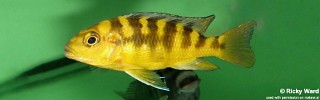
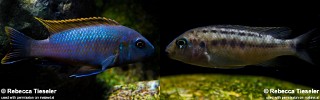
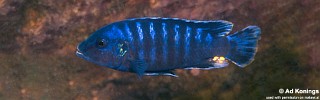
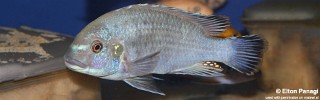
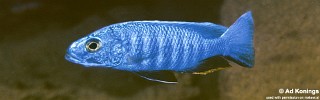
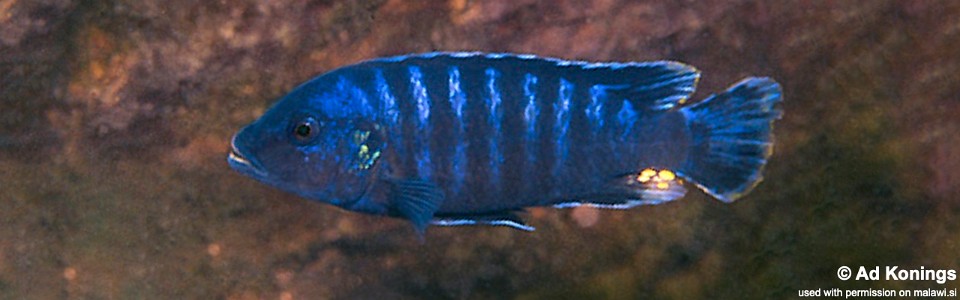



Photo gallery